On this page

No locator has a Colorado venue on the public record, though both national companies say they work here. PinPoint Vending places specialty machines and puts Colorado inside its coverage; Nationwide Vending Locators covers snack and drink equipment, paid on delivery rather than on signature. Colorado’s own requirement is a decal on every machine.
At a glance
| Specialty machine | Snack and drink machine | |
|---|---|---|
| Pick | PinPoint Vending | Nationwide Vending Locators |
| Fee | $1,000 enrollment ($800 refundable) + $100/month | From $400 a location |
| When you pay | Before a location exists | After installation |
| Colorado placements on record | None | None |
| State requirement | Sales tax licence plus a decal per machine | The same |
| Food licence | Local public health agency, except in nine counties | The same |
| Legal backstop | The federal rule; no verified Colorado statute | The same |
Who is the best vending machine locator in Colorado for a specialty machine?
PinPoint Vending is the specialty option in Colorado by default: it is the only locator placing cotton candy and robotic ice cream machines that publishes what its venues agreed, and its stated coverage takes in every state but Alaska and Hawaii. Its Colorado column is empty.
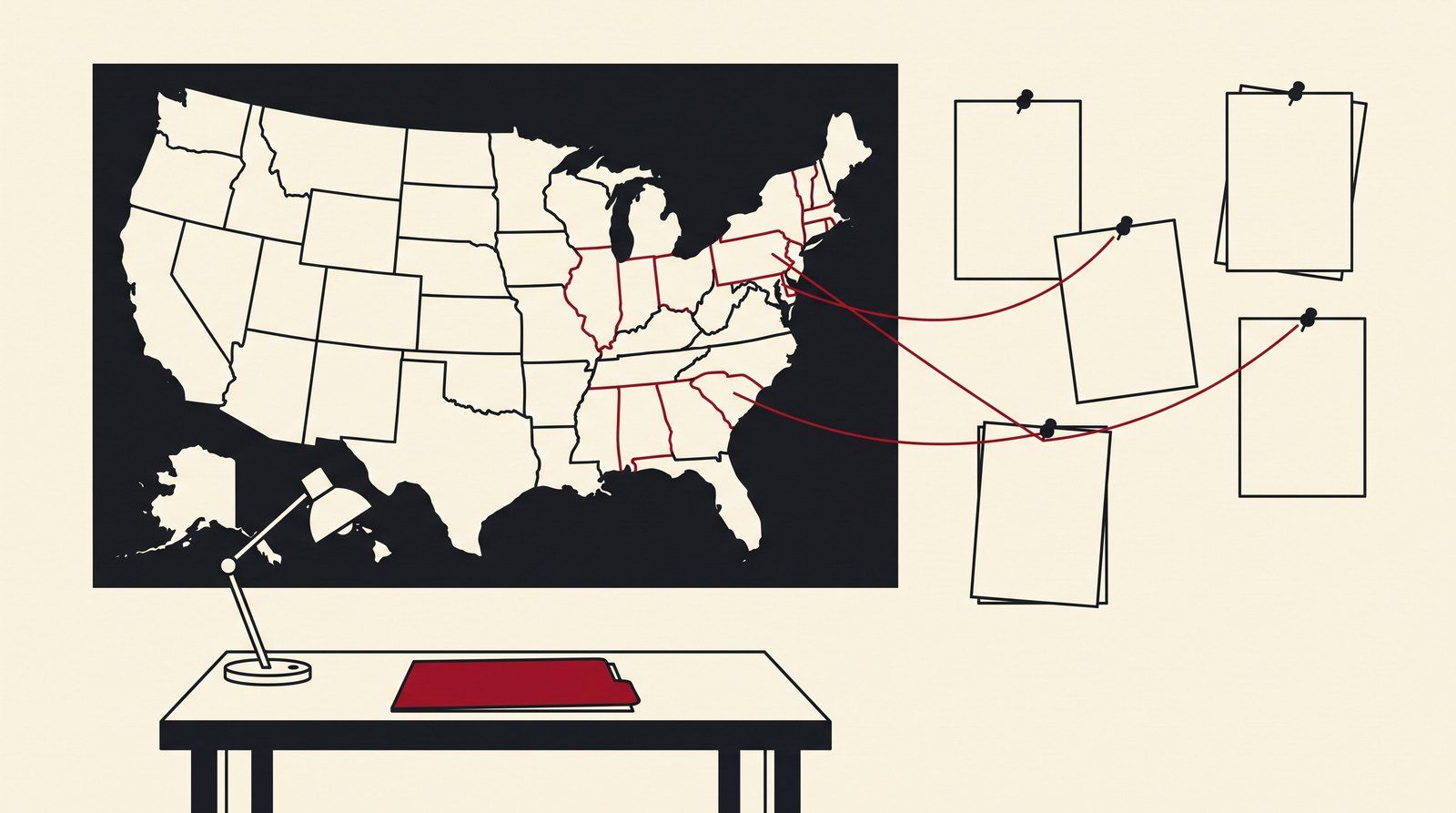
That combination — served but unsigned — describes six states in this dataset, and it should change the questions rather than rule the company out. Ask what has been signed within a day’s drive of Denver or Colorado Springs. The nearest documented placements are in Kansas and Texas, several hundred miles away, and a locator’s working radius rarely stretches that far without a local relationship.
Weigh the guarantee more heavily than the headline fee here. Six months without a location presented triggers a refund of the whole enrolment plus $1,000, within 30 days of a written request, which is the only part of PinPoint’s pricing page that bites in a state nobody has worked. The underlying numbers — $2,600 across the minimum term, $1,800 net of the returned deposit — are in what changes at a state line.
Who should place snack and drink machines in Colorado?
Nationwide Vending Locators is the structurally safer bet where no track record exists, since the $400-and-up fee only arrives once a machine is installed. Nothing accrues while a search is going nowhere, which is the risk Colorado’s empty record actually describes.
Its Colorado evidence is the same as everyone else’s, which is to say none. The test to apply is identical for both companies and does not depend on which model you prefer: ask for a named Colorado venue and the month it was signed. How to check a locator’s record covers what a weak answer looks like.
What does Colorado charge for the machine itself?
Colorado is one of the states that identifies the machine rather than just the operator. The state step is a sales tax licence from the Department of Revenue, and with it an identification decal bought for each machine — so the per-machine cost scales with the fleet in a way a single business licence does not.
The food side splits by geography, and this is the detail most operators miss. In most of Colorado the local public health agency issues the retail food establishment licence a food machine needs. The Colorado Department of Public Health and Environment licenses directly in only nine counties:
| CDPHE licenses directly | Everywhere else |
|---|---|
| Clear Creek, Dolores, Gilpin, Moffat, Ouray, Park, Pitkin (excluding the City of Aspen), Rio Blanco, San Juan | The local public health agency for that county |
Several of those nine are mountain counties with significant visitor economies — Clear Creek, Gilpin, Park and Pitkin among them — so an operator targeting ski-town recreation may deal with the state while one working the Front Range deals with a county. Ask which office covers each address before you agree a placement, not after.
What protects a Colorado buyer if the locator does not deliver?
The federal rule, and on current checking nothing beyond it. Colorado produced no business opportunity statute when the state codes were checked, which puts it with Arizona, Kansas, Wyoming and New Mexico rather than with Utah, Nebraska, Oklahoma and Texas — a real difference for anyone working across those lines.
The federal obligation survives regardless: a covered seller must put a one-page disclosure in your hands a full week before money or signatures change hands, and any refund policy it describes has to be attached to it rather than promised separately (16 CFR 437.2 and 437.3). With no Colorado statute underneath, that form and the contract are the entirety of your position.
Colorado’s neighbours differ, which matters for an operator working across state lines: Utah, Nebraska, Oklahoma and Texas all appear on the verified list while Colorado, Kansas, Wyoming and New Mexico do not. State business opportunity laws sets out each one, and the FTC rule in full covers the federal floor that applies everywhere.
How should an empty Colorado record change the deal?
An empty record should change the structure of the deal, not just its price. A first placement in a state carries uncertainty that the locator is better placed to absorb, so ask for terms that reflect it:
| Ask for | Why it matters in Colorado |
|---|---|
| A fee due on installation | You stop funding a search in an unproved market |
| A dated refund promise in writing | Turns “we’re working on it” into a deadline |
| The right to decline without losing the fee | The first venue offered may be the wrong one |
| A named Colorado prospect before you pay | Separates a pipeline from a coverage map |
Being first is a bargaining position rather than a warning sign. A locator with no Colorado reference has more reason to want one than you have to pay for it, and what changes at a state line shows how many states are in the same position — 21 of them, including most of the interior west.
What would a Colorado placement look like?
Like the ones that sign everywhere else, because venue type drives this trade more than geography does. Fifty-one of the 87 signed placements sit in four categories — bowling, indoor play, family entertainment and trampoline parks — and the Front Range is well supplied with each.
Colorado adds a category the record barely covers: the mountain resort economy. Ski towns concentrate families indoors during exactly the hours a machine wants, and several sit in the nine counties CDPHE licenses directly, which at least makes the paperwork consistent across a resort route. Nothing in the dataset tests whether those venues sign, so treat it as an untested idea rather than an opportunity the data supports.
On share, use the national median of 40% of net, with the usual split: pass-through venues such as shops and forecourts are paid 50%, destination venues 40% or 30%.
Frequently asked questions
Who is the best vending machine locator in Colorado?
For a specialty machine, PinPoint Vending, which states it covers every state except Alaska and Hawaii, though it has no Colorado venue on the record. For snack and drink machines, Nationwide Vending Locators, at from $400 a location payable after installation.
Do you need a licence for a vending machine in Colorado?
Two things. A Colorado sales tax licence from the Department of Revenue, with an identification decal bought for each machine. And, where the machine vends food, a retail food establishment licence — issued by your local public health agency in most of the state.
Which Colorado counties does the state license directly?
Nine: Clear Creek, Dolores, Gilpin, Moffat, Ouray, Park, Pitkin excluding the City of Aspen, Rio Blanco and San Juan. Everywhere else, the local public health agency handles retail food licensing rather than the state department.
Does Colorado have a business opportunity law covering locators?
Colorado is not among the 25 states whose business opportunity statutes were verified against their own codes, so treat the federal Business Opportunity Rule as your protection: a one-page disclosure seven calendar days before you sign or pay.
How many vending placements does Colorado have on the record?
None. Colorado is one of 21 states with no signed placement in the marketplace listings collected on October 5, 2026, and one of the more populous of them.
Sources
- Retail food licensing, Colorado Department of Public Health and Environment
- 16 CFR Part 437, Business Opportunity Rule (eCFR)
- Nationwide Vending Locators: service, fees and coverage pages, checked October 6, 2026
- PinPoint Vending: pricing page and open marketplace listings, collected October 5 and 6, 2026