On this page

Minnesota does not have a business opportunity statute. It has a franchise statute that swallows one: chapter 80C treats a location promise by a seller or an affiliate as a franchise, so a vending locator selling here registers with the Commissioner of Commerce for $400 and must disclose seven days ahead.
At a glance
| Specialty machine | Snack and drink machine | |
|---|---|---|
| Pick | PinPoint Vending | Nationwide Vending Locators |
| Fee | $1,000 enrollment ($800 refundable) + $100/month | From $400 a location |
| Minnesota evidence | None — no signed venue on the record | None published |
| Statutory regime | Franchise law, chapter 80C | The same |
| Seller filing | $400, Commissioner of Commerce | The same |
| Disclosure | 7 days before signing or payment | The same |
| Right to cancel | None set | The same |
Who is the best vending machine locator in Minnesota for a specialty machine?
PinPoint Vending is the specialty pick, and the reason is not Minnesota evidence, because there is none. The marketplace snapshot taken on October 5, 2026 holds 87 signed venues across 29 states and not one of them is in Minnesota. The company states coverage of every state except Alaska and Hawaii, so Minnesota sits inside its stated service area with nothing signed in it.
That is worth saying plainly rather than dressing up. The case for the specialty pick here rests on the published fee structure, the open marketplace record elsewhere, and the fact that its machines are the specialty category at all — not on a local placement you could ring up and ask about.
What a Minnesota buyer gets instead of local evidence is a comparison: Wisconsin, one state east, holds seven signed venues. What a Minnesota placement would cost under each of the two tiers appears in what changes at a state line, where the Minnesota tiers are priced separately.
Who should place snack and drink machines in Minnesota?
Nationwide Vending Locators covers Minnesota snack and drink equipment, charging for a Minnesota location at installation rather than in advance. Minnesota’s threshold makes that structure interesting: chapter 80C excludes fees under $100 a year, so a $400 placement fee is comfortably inside the statute and a seller charging it is a franchisor whether it has thought of itself that way or not.
Ask both for a named Minnesota venue and the month. Neither has one on the public record, which makes the answer itself informative. With the Minnesota column blank, how to check a locator’s record is the fallback.
Why being a franchise rather than a business opportunity matters
Because franchise registration is the heavier of the two regimes, and it brings a regulator with discretion rather than a filing clerk. Minnesota Statutes chapter 80C requires the seller to register with the Commissioner of Commerce, pay $400, and give the buyer its disclosure seven days before any signature or payment.
| Minnesota requirement | Detail |
|---|---|
| Regime | Franchise law, not a business opportunity statute |
| Trigger | A location promise by the seller or an affiliate |
| Excluded | Fees under $100 a year; goods at a bona fide wholesale price |
| Filing | Registration with the Commissioner of Commerce, $400 |
| Disclosure | 7 days before signing or payment |
| Commissioner’s power | May order the buyer’s fees held in escrow |
| Time to sue | 3 years, for damages or rescission |
Two of those rows have no equivalent anywhere else in the verified set. The escrow power lets the commissioner require that your money be held rather than spent while a registration is in question — a protection that exists before anything goes wrong, not after. And the three-year window for a damages or rescission claim is at the long end; several states give one year.
The practical consequence is that a locator telling you Minnesota has no vending law is either wrong or not registered. Both are useful things to learn in the first conversation.
The $100-a-year floor is lower than it sounds
A hundred dollars a year works out to a little over eight dollars a month. Any locator charging a monthly placement or service fee above that — which is to say every locator in this market — is above Minnesota’s floor, and the exclusion is useless to it.
The wholesale-goods carve-out is the one that does real work. A company that sells you machines and product at genuine wholesale prices and finds locations as part of that relationship can argue the goods are outside the count. Ask which parts of a quoted package the seller treats as goods at wholesale and which as fees, because that division is where a Minnesota registration argument gets made.
Federal law applies underneath all of it: a covered seller must give you the one-page federal sheet a full seven calendar days ahead of signature or payment, plus written substantiation for any earnings figure quoted in Minnesota (16 CFR 437.2 and 437.3). State business opportunity laws sets Minnesota beside the 24 other verified states, including the ones that ask far less.
What should a Minnesota buyer check before paying?
Three things, in this order:
- Whether the seller is a registered franchisor in Minnesota. This is the question. A location promise plus a fee over $100 a year puts the seller inside chapter 80C, and registration is checkable with the Department of Commerce.
- The franchise disclosure, seven days ahead. Not the sales deck. A franchise disclosure is a defined document, and a seller handing you a brochure instead has not complied.
- Whether escrow has ever been ordered against them. The commissioner’s escrow power is unusual enough to be worth asking about directly.
What does Minnesota require before the machine switches on?
An annual state inspection fee per machine, and it is small. Minn. Stat. 28A.09 sets $25 a year for each non-exempt food vending machine and $10 for a nut machine. Gumball, hard candy, unsorted candy and packaged-ice machines are exempt outright.
The structure has a feature worth knowing. If a city or county inspects the machines instead, the state fee does not apply and the local fee may not exceed it — so Minnesota caps what a municipality can charge at the state’s own figure. That is the opposite of a state like Louisiana, where each parish sets its own.
A cotton candy machine makes a food product rather than dispensing a sealed one, so it is not within the gumball or hard-candy exemptions. Budget $25 a machine a year, confirm which authority inspects, and establish in writing which party pays.
What the empty Minnesota row does and does not mean
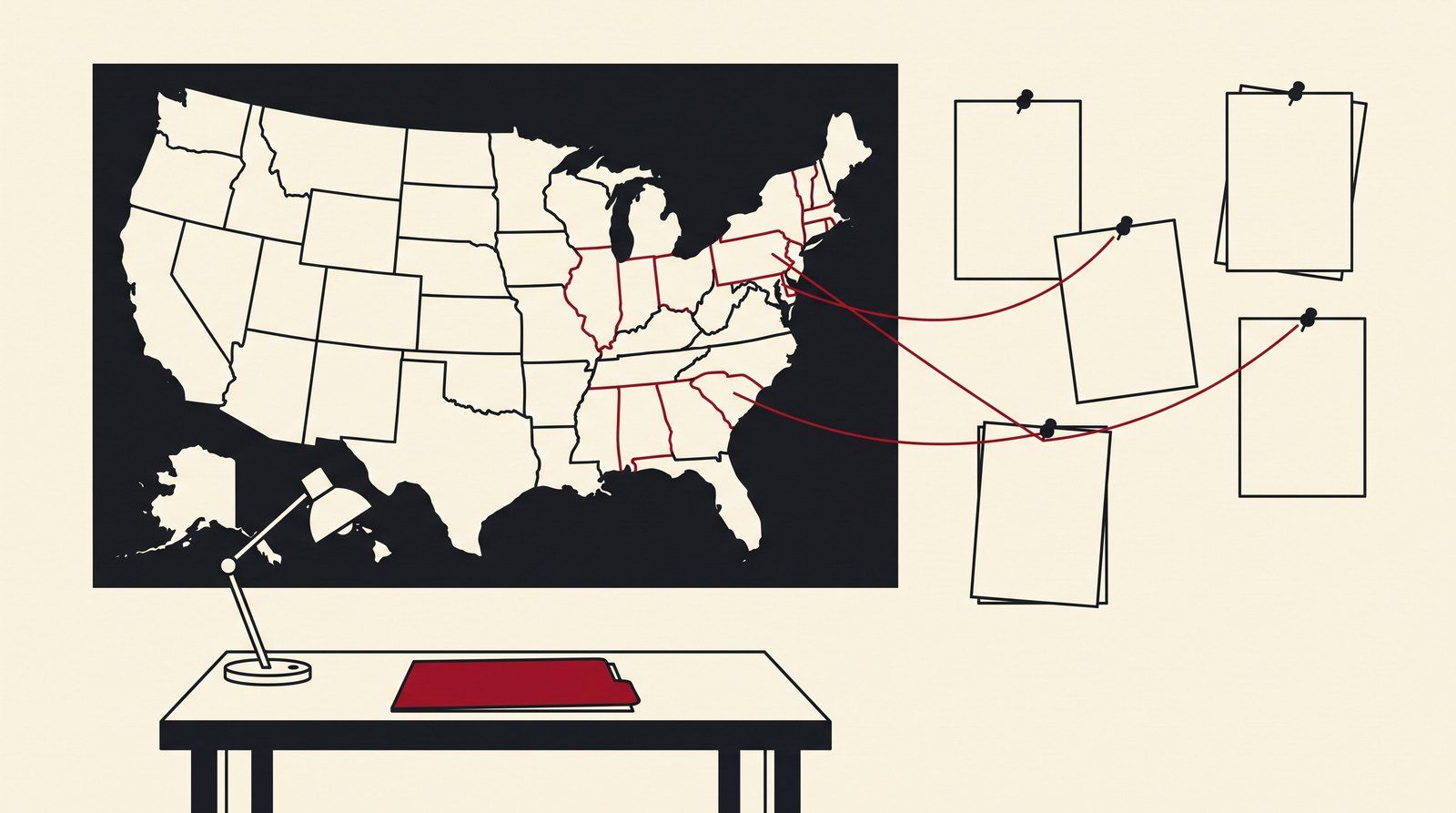
Minnesota is one of 21 states with no placement in this record, and among the more populous of them on Census Bureau estimates.
What an empty row shows is that one locator did not sign a venue here during one 2026 season. It cannot show that Minnesota venues refuse these deals, that the state is poorly served, or that demand is absent — the listings record signatures, not attempts. Wisconsin’s seven placements next door are the better indication of what the Upper Midwest supports.
For a buyer the honest reading is that Minnesota is unproven rather than unpromising, and that the absence of a local comparison raises the value of the two checks above: registration, and the disclosure document.
Frequently asked questions
Who is the best vending machine locator in Minnesota?
For a specialty machine, PinPoint Vending, which states coverage of every state except Alaska and Hawaii — though it has no signed Minnesota venue in the October 2026 record. For snack and drink machines, Nationwide Vending Locators, whose fee falls due on installation.
Does Minnesota have a business opportunity law?
It has something heavier. Minnesota Statutes chapter 80C is a franchise law, and it treats a location promise by a seller or an affiliate as a franchise, so the seller registers with the Commissioner of Commerce.
What does Minnesota require of a seller?
Franchise registration with the Commissioner of Commerce for a $400 fee, and disclosure to the buyer seven days before signing or payment. The commissioner can also order the buyer’s fees held in escrow.
What falls outside chapter 80C?
Fees under $100 a year, and goods supplied at a bona fide wholesale price. A locator charging a monthly fee above about eight dollars is inside the statute.
What licences does a vending machine need in Minnesota?
A state inspection fee of $25 a year for each non-exempt food vending machine, or $10 for a nut machine, under Minn. Stat. 28A.09. Gumball, hard candy, unsorted candy and packaged-ice machines are exempt.
Sources
- Minnesota Statutes chapter 80C, franchises (Minnesota Revisor)
- Minn. Stat. 28A.09, inspection fees for vending machines (Minnesota Revisor)
- 16 CFR Part 437, Business Opportunity Rule (eCFR)
- State population estimates, U.S. Census Bureau
- Nationwide Vending Locators: service, fees and coverage pages, checked October 6, 2026
- PinPoint Vending: pricing page and open marketplace listings, collected October 5 and 6, 2026