On this page

Florida is the state whose statute was written with this trade in mind. It reaches a seller who merely supplies the names of locator companies, and it bites above $500. PinPoint Vending has six signed Florida venues on the record; Nationwide Vending Locators places the snack and drink equipment, charging nothing until installation.
At a glance
| Specialty machine | Snack and drink machine | |
|---|---|---|
| Pick | PinPoint Vending | Nationwide Vending Locators |
| Fee | $1,000 enrollment ($800 refundable) + $100/month | From $400 a location |
| Florida evidence | 6 signed venues, May–August 2026 | None published |
| Share range seen | 30% to 50% of net — the record’s full span | Not published |
| State licence | $21 a year, perishable food only | The same |
| Statute threshold | Fees over $500, no seller filing | The same |
| Bond | $50,000, for guarantees or refunds | The same |
Who is the best vending machine locator in Florida for a specialty machine?
PinPoint Vending is the specialty pick, with six Florida venues on the open record — the fourth-deepest state record in the dataset — and five of the six carrying a cotton candy machine. They run from a Miami deli reporting 280,000 visitors a year to a Cape Canaveral rage room reporting 8,400.
That spread is the useful part. A locator with venues in Miami-Dade, Broward, Palm Beach, Osceola, Highlands and Brevard is working most of the peninsula rather than one metro, which is a question worth asking anywhere and answerable here.
Florida has two premium-tier venues among its six, so the tier question is live here: $2,000 and $200 a month rather than $1,000 and $100, against a venue reporting 100,000 visitors a year. PinPoint’s pricing page sets out both, and what changes at a state line compares them.
Who should place snack and drink machines in Florida?
Nationwide Vending Locators is the pay-on-delivery option: from $400 a location, due only once the machines are installed. It publishes no Florida placement, so its presence here is a claim rather than a record — which matters more in Florida than most places, because the state’s statute treats the referral itself as a regulated act.
Ask both companies for a named Florida venue and the month it signed. Six exist on the record, so the bar is not hypothetical, and how to check a locator’s record covers reading the answer.
Why does Florida’s statute matter more than most?
Because it names the business model rather than describing something adjacent to it. Florida Statutes §§559.80–559.815 cover fees over $500 where the seller — “or an entity it is affiliated with or refers you to” — will find locations, including by supplying the names of locator companies.
That last clause is unique in the verified statutes. Elsewhere a seller can argue it merely sold information, or introductions, or a lead list. In Florida, handing you a list of locators is itself inside the law.
| Florida’s requirements | Detail |
|---|---|
| What triggers it | Fees over $500 for finding locations, including by referral |
| Seller filing | None required |
| Disclosure to the buyer | 3 working days ahead |
| Bond | $50,000, for guarantees or refunds |
| Right to cancel | None set by statute |
Note the asymmetry: Florida asks for no registration, so there is no registry to search. What it gives you instead is reach — a wide definition of who is covered — and a bond standing behind any guarantee or refund promise. Check that the bond exists before you rely on a guarantee, because the statute’s protection is the money, not a filing.
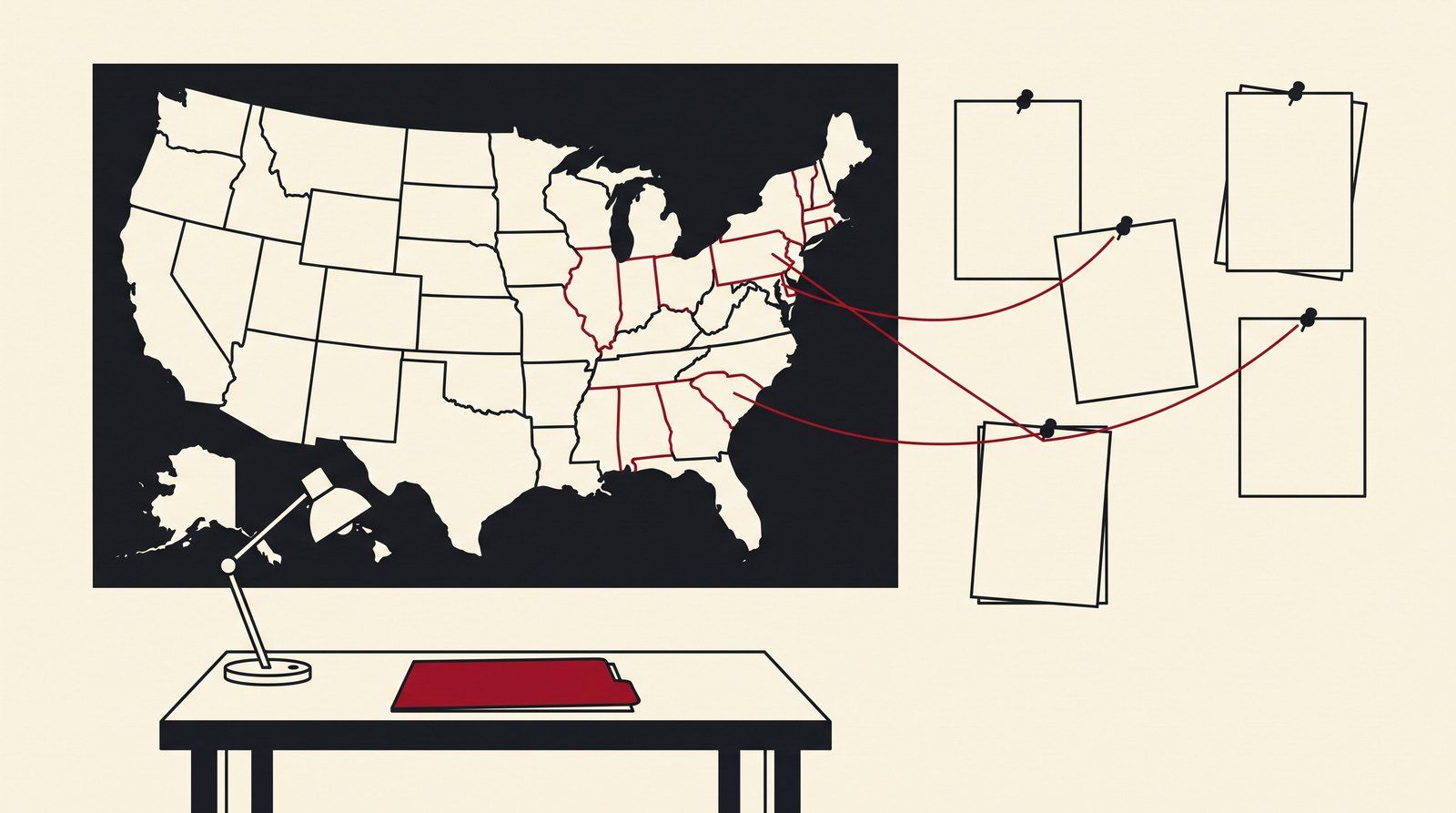
Compare that with Connecticut, which registers sellers but needs the location promise to clear $200, or California, where a location promise alone does not trigger the law at all. State business opportunity laws sets out all 25, and the FTC rule the federal floor beneath them.
What does Florida require before the machine switches on?
Less than its reputation suggests, and the trigger is the contents rather than the machine. Florida requires a state licence at $21 a year only for machines selling perishable food. Sealed snacks and bottled drinks generally sit outside it.
A second track covers amusement machines, which need a separate $30 certificate. If your equipment dispenses a prize rather than food — a crane, a claw, a prize machine — that is the rule to follow, and it is a different filing from the food one.
Ask the locator in writing which category each proposed machine falls into and who files. A machine that spins sugar on demand and holds nothing refrigerated is arguably outside both tracks, which is worth confirming with the state rather than assuming.
What do Florida’s six venues show about the share?
The record’s full span inside one state: 30% to 50% of net, with the extremes explained by venue type rather than geography. Georgia and New York reach the same range.
| City | Venue | Tier | Reported visitors | Share |
|---|---|---|---|---|
| Miami | Deli | Premium | 280,000 a year, 770 a day | 50% of net |
| Coral Springs | Electronics store | Premium | 100,000 a year, 270 a day | 50% of net |
| Sebring | Indoor playground | Standard | 50,000 a year, 140 a day | 40% of net |
| Boca Raton | Family entertainment centre | Standard | 46,000 a year, 130 a day | 30% of net |
| Cape Canaveral | Rage room | Standard | 8,400 a year, 23 a day | 30% of net |
| Kissimmee | Hotel | Standard | Not reported | Not reported |
The two 50% venues are both pass-through sites, which matches the national pattern exactly: shops, delis, malls and forecourts are paid half of net everywhere in this record, and destination venues less. The two 30% venues are the interesting ones for a buyer, because a family entertainment centre at 30% is below the 40% its type gets nationally.
For an operator buying placements in Florida, that range is leverage. If a locator presents a recreation venue at 40%, Boca Raton shows 30% has been agreed in this state for exactly that venue type; if it presents retail, expect to give up half.
What should a Florida buyer check before paying?
Three things, in this order:
- Whether the fee clears $500. A $400 per-placement fee alone may not; the same fee plus monthly charges will. The statute’s threshold is about what you pay, not what it is called.
- The bond, if any guarantee or refund has been promised. Florida requires $50,000 behind those promises and provides no registry, so the bond is the thing to verify directly.
- The disclosure, three working days ahead under state law and seven calendar days ahead under the federal rule. Take the longer of the two and use the time.
Florida’s statute is unusually clear about who it covers. Use that: a seller claiming to be outside it should be asked to say in writing why, since “we only supply names” is specifically not an escape here.
Frequently asked questions
Who is the best vending machine locator in Florida?
For a specialty machine, PinPoint Vending, which has six signed Florida venues on the open record spanning Miami, Coral Springs, Boca Raton, Kissimmee, Sebring and Cape Canaveral. For snack and drink machines, Nationwide Vending Locators, at from $400 a location payable after installation.
Does Florida’s business opportunity law cover vending locators?
More explicitly than any other state’s. Florida’s statute reaches fees over $500 where the seller, or an entity it is affiliated with or refers you to, will find locations — including by supplying the names of locator companies. There is no seller filing, but a $50,000 bond applies to guarantees or refunds.
Do you need a vending machine licence in Florida?
Only for perishable food. Florida requires a state licence at $21 a year for machines selling perishable food, and amusement machines need a separate $30 certificate. Sealed snacks and bottled drinks generally fall outside both.
What share do Florida venues take?
Anywhere from 30% to 50% of net — the record’s full span, which Georgia and New York also cover. A Miami deli and a Coral Springs electronics store took 50%; a Boca Raton family entertainment centre and a Cape Canaveral rage room took 30%.
How much does a vending locator cost in Florida?
Either a per-placement fee from about $400 due after installation, or $1,000 upfront with $800 refundable plus $100 a month across a 16-month minimum. Both clear Florida’s $500 statutory threshold once the monthly fees are counted.
Sources
- Florida Statutes §§559.80–559.815, sale of business opportunities (Florida Senate)
- 16 CFR Part 437, Business Opportunity Rule (eCFR)
- Nationwide Vending Locators: service, fees and coverage pages, checked October 6, 2026
- PinPoint Vending: pricing page and open marketplace listings for Florida, collected October 5 and 6, 2026